Connect with us

Games

The Olympic Games: A Complete Guide

Published

on

The Olympic Games: A Complete Guide

Introduction

The Olympic Games are the world’s premier international sporting competition, bringing together athletes from around the globe to compete in an extraordinary display of athleticism, unity, and heritage. Representing centuries of history and evolution, the Olympics celebrate not just sport but also cultural exchange and global cooperation.

Originally held in ancient Greece more than 2,700 years ago, the Games were revived in the modern era in 1896 with the first modern Olympics in Athens, Greece. Today, the Olympics consist of two major events—the Summer Olympic Games and the Winter Olympic Games—held every four years, with Summer and Winter editions staggered so there is an Olympic event almost every two years.

History and Evolution

Ancient Origins

  • The first recorded ancient Olympic Games date back to 776 B.C. and were held at Olympia in Greece in honor of the Greek god Zeus.
  • Only freeborn male Greek citizens were allowed to participate. Over time, various athletic contests, like wrestling, chariot races, and foot races, were added.
  • The ancient Games continued for nearly 12 centuries until they were ended in A.D. 393.

Modern Olympics

  • The modern Olympic Movement was inspired by Baron Pierre de Coubertin, who founded the International Olympic Committee (IOC) in 1894, leading to the first modern Olympics in 1896.
  • The Olympic symbol—five interlaced rings representing the five inhabited continents—was introduced in the early 20th century and has become one of the most recognizable global logos.
  • The Games have grown massively: from 280 athletes from 12 countries in 1896 to thousands of athletes from over 200 teams today.

Modern Olympics Overview

Summer Olympic Games

  • The Summer Olympics include some of the most popular sports in the world: athletics, swimming, gymnastics, cycling, and more.
  • The 2024 Summer Olympics in Paris, France featured 206 national teams and millions of spectators, with the United States leading the medal count.
  • Paris 2024 also set several historic records, including full gender parity among athletes.

Winter Olympic Games

  • The Winter Games focus on snow and ice sports like skiing, ice hockey, figure skating, and bobsleigh.
  • The 2026 Winter Olympics were held in Milan and Cortina, Italy, notable for spreading ceremonies and events across multiple venues.

Olympic Calculations & Numbers

Here are some interesting figures and breakdowns from recent and historic Olympic Games:

Growth Over Time (Example Calculation)

  1. Participants and Nations in 1896 vs. 2024
    • 1896: ~280 athletes, 12 nations.
    • 2024: ~11,000+ athletes (Summer Olympics), 206 National Olympic Committees.
    Percentage increase in nations 2061212×1001617% increase\frac{206 – 12}{12} \times 100 \approx 1617\% \text{ increase}12206−12​×100≈1617% increase
  2. Olympic Editions
    • Summer Games through 2026: 30 editions hosted in 23 cities.
    • Winter Games through 2026: 25 editions in 22 cities.

Medals Breakdown (Sample from Paris 2024)

  • Total countries medaling: 91 nations.
  • Gold medals (Top Country): United States and China tied with 40 golds.
  • Record participation: Over 9.5 million tickets sold.

Popular Olympic Sports

Some of the key sports that draw the most attention include:

  • Athletics (track & field)
  • Swimming
  • Gymnastics
  • Basketball
  • Soccer (football)
  • Ice hockey (Winter Games)
  • Alpine skiing (Winter Games)
    Because the Olympic program varies slightly each edition, the number of sports can change.

FAQs

1. What are the Olympics?

The Olympic Games are an international multi-sport event held every four years, alternating between a Summer and Winter edition. They bring together athletes from around the world to compete in various sports and showcase global excellence and peace through sports.

2. When did the first Olympics take place?

The ancient Olympics began in 776 B.C. in Greece. The modern Olympics were revived in 1896 in Athens.

3. How often are the Olympics held?

Each edition (Summer and Winter) occurs every four years. Since 1994, the Summer and Winter Games alternate every two years on the global calendar.

4. How many countries participate?

Modern Olympics typically include athletes from over 200 countries or National Olympic Committees (NOCs).

5. What are the Olympic Rings?

The five interlocking rings represent the unity of the world’s continents and the coming together of athletes from around the globe.

6. What is the role of the IOC?

The International Olympic Committee (IOC) organizes and oversees the Olympic Games, sets rules, awards hosting rights, and promotes the Olympic Movement.

7. Can professional athletes compete?

Yes. Professional and amateur athletes alike can compete in most Olympic sports, a change that began in the late 20th century.

8. How do nations earn medals?

Medals are awarded based on finishing positions: Gold for first, Silver for second, and Bronze for third in each event. The total medal count often reflects national performance.

9. What is an Olympiad?

An “Olympiad” is the four-year period between Summer Olympic Games and is used as a way to count the Games historically.

10. How many events are there?

The number of medal events varies by edition but can exceed 300 in a modern Summer Games.

Calculation

The Olympics are more than just a sports competition— they’re a global cultural phenomenon with roots in ancient civilization and a vibrant, evolving future. From humble beginnings with a few hundred athletes to hosting tens of thousands from nearly every nation on Earth, the Olympic Games inspire millions with excellence,

Continue Reading
Click to comment

Leave a Reply

Your email address will not be published. Required fields are marked *

Games

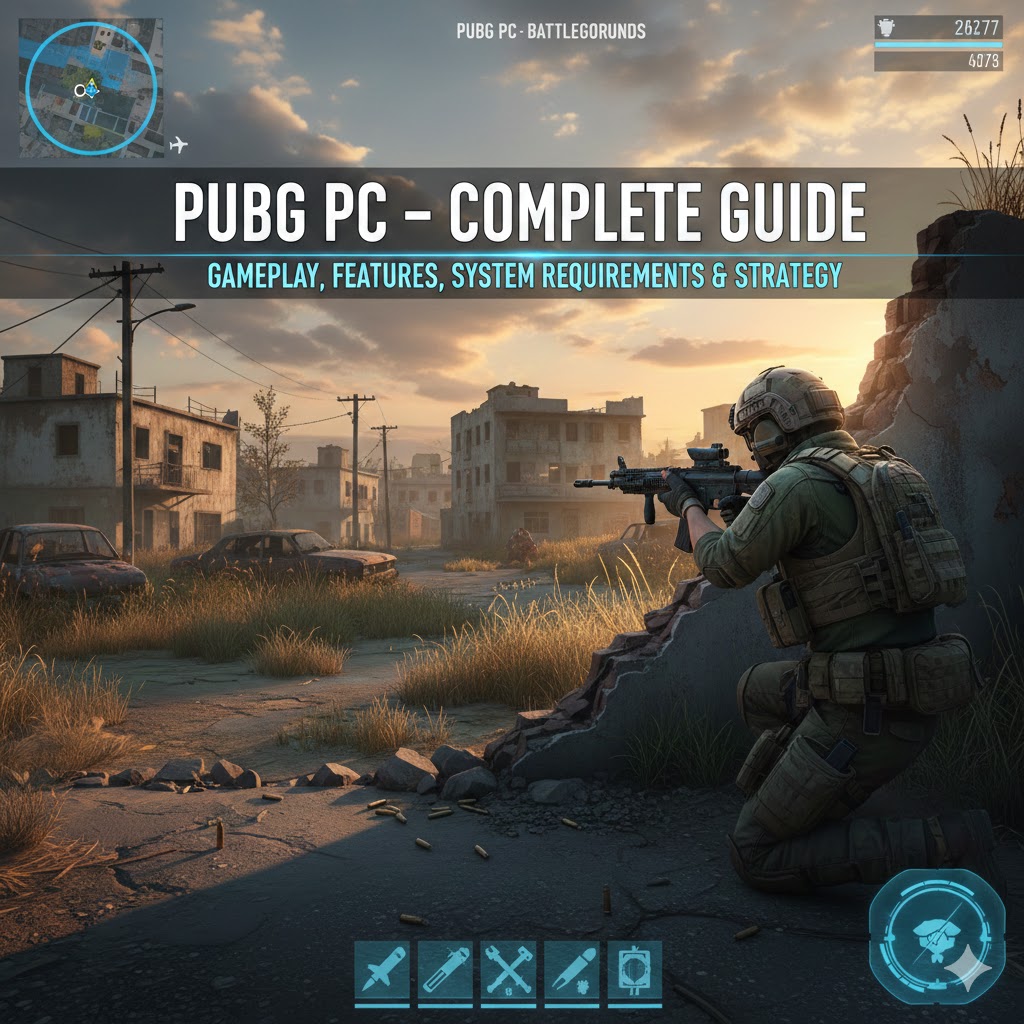
PUBG PC – Complete Guide, Gameplay, Features, System Requirements & Strategy

Published

on

PUBG PC – Complete Guide, Gameplay, Features, System Requirements & Strategy

PUBG PC refers to the computer version of PUBG: Battlegrounds, one of the most influential battle royale games ever released. Developed and published by Krafton, it popularized large-scale survival shooters where 100 players compete until only one remains. Since its launch, it has shaped the multiplayer gaming landscape and inspired countless similar titles.

This article covers gameplay mechanics, features, requirements, strategies, calculations, and FAQs to give you a full understanding of PUBG on PC.

1. Overview of PUBG PC

PUBG PC is a tactical survival shooter where players parachute onto a large map, scavenge weapons and equipment, and fight to be the last person or team alive. Matches typically last 20–35 minutes, depending on survival time and playstyle.

Unlike arcade shooters, PUBG emphasizes:

  • Realistic gun mechanics
  • Bullet physics and recoil
  • Tactical movement
  • Strategic positioning

Players must think carefully, not just aim quickly.

2. Gameplay Mechanics

Battle Royale Format

Each match begins with players boarding a plane that flies across a map. Players choose when to jump, which determines landing location and early-game strategy.

Loot System

Loot appears randomly in buildings and locations:

  • Weapons
  • Armor
  • Medical supplies
  • Attachments
  • Grenades

High-risk zones often contain stronger gear.

Safe Zone Mechanic

A shrinking circle forces players into smaller areas. Staying outside the zone causes damage over time, ensuring constant action.

3.Game Modes

PUBG PC offers multiple modes:

Solo Mode – Every player fights alone.
Duo Mode – Teams of two cooperate.
Squad Mode – Teams of four.
Ranked Mode – Competitive system with skill tiers.
Arcade Modes – Faster gameplay variations like Team Deathmatch.

4. Maps Available

PUBG PC includes multiple large maps with unique terrain:

  • Erangel – Classic balanced map
  • Miramar – Desert terrain, long-range combat
  • Sanhok – Jungle environment, fast matches
  • Vikendi – Snow terrain
  • Taego – Korean-inspired landscape
  • Deston – Urban vertical combat

Each map requires different tactics.

5. Weapons and Combat System

Weapons are divided into categories:

TypeExamplesBest Use
Assault RiflesM416, AKMAll-round combat
Sniper RiflesKar98k, AWMLong range
SMGsUMP45, VectorClose range
ShotgunsS1897Buildings
LMGsM249Suppression

Attachments like scopes, grips, and suppressors significantly improve weapon performance.

6. System Requirements for PUBG PC

Minimum

  • CPU: Intel Core i5-4430 / AMD FX-6300
  • RAM: 8 GB
  • GPU: GTX 960 / R7 370
  • Storage: ~40 GB

Recommended

  • CPU: Intel i5-6600K / Ryzen 5 1600
  • RAM: 16 GB
  • GPU: GTX 1060 / RX 580

Higher specs improve frame rate and visual quality.

7. Performance Calculation Example

Gamers often calculate expected FPS (frames per second) to judge performance.

Basic FPS Estimation Formula

Estimated FPS ≈ GPU Benchmark Score ÷ Game Load Factor

Example:

  • GPU benchmark score = 9000
  • PUBG load factor ≈ 120
FPS ≈ 9000 ÷ 120
FPS ≈ 75

So the system would likely run PUBG around 75 FPS on medium settings.

8. Strategies for Winning Matches

Early Game Tips

  • Land near buildings but not crowded zones
  • Grab weapons immediately
  • Avoid unnecessary fights

Mid Game

  • Stay near safe zone edges
  • Use terrain for cover
  • Upgrade armor and attachments

Late Game

  • Move slowly and quietly
  • Listen for footsteps
  • Use grenades strategically

Winning depends on patience and positioning rather than constant fighting.

9. PUBG PC Ranking System

Ranked mode uses a tiered system:

  • Bronze
  • Silver
  • Gold
  • Platinum
  • Diamond
  • Master

Points increase based on survival time, kills, assists, and placement. High-rank matches are more tactical and competitive.

10. Why PUBG PC Became So Popular

PUBG’s success comes from its balance of realism and tension:

  • Large maps create suspense
  • Gunplay rewards skill
  • Matches feel unique
  • Survival focus creates adrenaline

It also helped define the modern battle royale genre.

11. Advantages of Playing PUBG on PC

Compared to mobile or console versions, PC offers:

  • Higher graphics quality
  • More precise mouse aiming
  • Better frame rates
  • Custom graphics settings
  • Competitive esports environment

Many professional players prefer PC because of its accuracy and performance.

12. Common Mistakes Beginners Make

New players often:

  • Land in hot zones immediately
  • Ignore safe zone movement
  • Fire unnecessarily
  • Forget sound awareness
  • Stay exposed in open areas

Avoiding these mistakes dramatically improves survival chances.

13. Tips to Improve Faster

  • Practice recoil control in training mode
  • Learn map layouts
  • Watch skilled streamers
  • Play with teammates
  • Adjust sensitivity settings

Improvement in PUBG is mostly about awareness and positioning rather than fast reflexes alone.

FAQs

Q1. Is PUBG PC free?
Yes, the base game became free-to-play, though cosmetic items and passes cost money.

Q2. How long does a match last?
Usually 20–35 minutes depending on survival.

Q3. What is the best weapon?
There is no single best weapon. Assault rifles like M416 are popular because they work well in most situations.

Q4. Can low-end PCs run PUBG?
Yes, but you may need to lower graphics settings for smooth performance.

Q5. Is PUBG PC difficult for beginners?
It can be challenging at first due to realistic mechanics, but practice improves skill quickly.

Q6. Does PUBG require internet?
Yes, it is an online multiplayer game and cannot be played offline.

Calculation

PUBG PC remains one of the most immersive and strategic battle royale experiences available. Its realistic combat, massive maps, and tactical gameplay make every match intense and unpredictable. Whether you prefer stealth survival or aggressive combat, PUBG offers endless replay value. With practice, smart strategy, and the right settings, players can steadily improve and enjoy the thrill of fighting for that iconic victory message: Winner Winner Chicken Dinner.

Continue Reading

Games

Crypto30x.com — What It Is, How It Works, and Why You Should Be Cautious

Published

on

Crypto30x.com — What It Is, How It Works, and Why You Should Be Cautious

Cryptocurrency has become one of the most talked-about markets in the world. With major coins like Bitcoin and Ethereum making huge gains in the past decade, many platforms promise incredible returns to investors. One such website that has attracted attention — and controversy — is Crypto30x.com.

This article breaks down what Crypto30x.com claims to offer, the red flags identified by reviewers and users online, how profit calculations like “30× returns” should be assessed realistically, and what questions you should ask before engaging with any crypto platform.

1. What Is Crypto30x.com?

Crypto30x.com is a website that appears online as a crypto-related platform. Some descriptions portray it as a cryptocurrency trading service or investment platform where users can trade and potentially multiply their investment with advanced tools and AI-driven bots. Others refer to Crypto30x.com as a crypto blog or informational site with market analysis and trends, though the content quality and transparency are questionable.

However, serious concerns have been raised by independent reviewers and user discussions on Reddit and scam-alert blogs about the site’s legitimacy, withdrawal practices, and marketing style.

2. The Big Claim — “30× Returns”

The most eye-catching thing about Crypto30x.com is its suggestion of up to 30× returns on investments. This implies that, if you invest $100, you might somehow turn it into $3,000 — a 30-fold increase. While extremely high gains do happen sometimes in crypto markets, no legitimate platform guarantees them.

Why 30× Is Not Realistic

To understand this better, here’s a simple example:

InvestmentClaimed GrowthFinal Amount
$100×2 (double)$200
$100×5$500
$100×10$1,000
$100×30 (claimed)$3,000

Real professionals in crypto trading rarely deliver consistent annual returns much higher than 50–100%, because markets are volatile and unpredictable. A 30× profit in a short time — especially guaranteed — is statistically and practically extremely unlikely without taking huge risk. Legitimate financial advisors will always emphasize that past performance is not a guarantee of future results, and that high returns come with high risk.

No credible exchange or regulated financial service guarantees such results — if someone promises this, that’s a major red flag.

3. What Critics Say — Key Red Flags

Independent reviewers and online crypto communities have highlighted several warning signs associated with Crypto30x.com:

a) Unrealistic Profit Promises

Platforms that boast of “guaranteed 30× profits” without detailed explanations or verified track records are often trying to lure users with hype.

b) Lack of Regulation

A legitimate financial or crypto trading platform is usually registered with regulatory bodies such as the U.S. SEC, UK FCA, or similar authorities. Crypto30x.com does not clearly display such licenses or oversight details.

c) Anonymous or Hidden Ownership

There’s no publicly available list of founders, company address, or leadership profiles — a common sign that transparency is lacking.

d) Withdrawal Issues

Multiple reports from forum threads and reviews say that users sometimes have trouble withdrawing funds after depositing — or are told to deposit more before they can withdraw.

e) Marketing Tactics

Critics say the platform is often promoted through aggressive ads, influencer-style testimonials, or third-party social media pages, rather than official channels — another sign of potentially unscrupulous marketing.

Together, these warning signs don’t prove that Crypto30x.com is a scam in every case, but they do suggest a higher risk profile than reputable exchanges or services and should make any prospective investor more cautious.

4. Realistic Profit Calculations vs. Hype

Instead of buying into lofty numbers, here’s how you could calculate possible (but not guaranteed) crypto earnings realistically:

Example: Bitcoin Investment Growth

If Bitcoin increases:

  • 10% in a month → a $1,000 investment becomes $1,100
  • 50% in a year → $1,000 becomes $1,500
  • 10× in a strong bull market → $1,000 becomes $10,000

These results require significant market gains and are not guaranteed.

On the other hand, at 30×:

  • $1,000 × 30 = $30,000

There’s no serious exchange or trading strategy that consistently delivers such a multiplier without enormous risk or losses. Always remember that high leverage in crypto increases both gains and losses.

5. FAQs

Q1. Is Crypto30x.com a legit trading platform?

There’s no clear evidence it’s regulated or widely recognized as legitimate. Many independent sources suggest it may be a high-risk platform that could be misleading.

Q2. Can I really earn 30× returns?

No reliable financial service can guarantee that. Returns in crypto vary widely, and promised “30× profits” should be treated with extreme skepticism.

Q3. Is it safe to deposit crypto?

Depositing funds to unverified or unregulated platforms can lead to loss of funds, especially since crypto transactions are irreversible.

Q4. What should I check before investing in a platform?

Before risking money:

  • Verify regulation or licensing
  • Look for clear team info
  • Read user reviews from multiple independent sources
  • Confirm transparent withdrawal procedures

Q5. Are there safer alternatives?

Yes. Major regulated exchanges like Binance, Coinbase, Kraken, and others provide transparent trading and have established reputations.

6. How to Protect Yourself — Safety Tips

Here are general tips to avoid crypto scams and protect your money:

1. Do Your Own Research (DYOR)

Always validate any claims independently — don’t just trust promotional material.

2. Use Regulated Platforms

If your country requires licensing for trading platforms, use services that meet those standards.

3. Don’t Fall for “Too Good to Be True” Claims

High, guaranteed returns with low risk are extremely rare in real markets.

4. Protect Your Personal Data

Never hand over private keys, wallet backups, or personal identity documents to questionable platforms.

5. Ask Around in Crypto Communities

Forums like Reddit or crypto discussion groups often share honest experiences.

Calculation

Crypto30x.com is a platform that some sources portray as a high-risk or potentially misleading investment or information site. Widely reported red flags include unrealistic profit claims, lack of regulation, hidden ownership, and complaints about withdrawal difficulties.

Continue Reading

Games

Jeroen Dik: A Multifaceted Journey of Innovation and Influence

Published

on

Jeroen Dik: A Multifaceted Journey of Innovation and Influence

Jeroen Dik is an intriguing figure known for his contributions to a variety of fields, including science, technology, and entrepreneurship. A Dutch innovator with a reputation for bridging the gap between academic theory and real-world applications, Dik’s work has influenced a wide range of industries from biotechnology to artificial intelligence. In this article, we will explore Dik’s background, career achievements, and his lasting impact on modern science and technology.

Early Life and Education

Born and raised in the Netherlands, Jeroen Dik was drawn to the sciences from an early age. His natural curiosity and desire to understand how things work propelled him toward a career in research and development. After completing his high school education, Dik went on to pursue a degree in a scientific discipline that would set the stage for his later work. He attended the University of Amsterdam, where he studied molecular biology and biotechnology, laying the foundation for his scientific career.

During his time at the University of Amsterdam, Dik’s research interests evolved. While his initial focus was on molecular biology, his academic curiosity broadened to encompass fields like bioinformatics, computational biology, and data science. His ability to combine technical expertise with creative problem-solving became a hallmark of his later work. It was in this academic environment that Dik began to develop the intellectual versatility that would serve him throughout his career.

Early Career and the Foundation of Innovation

After completing his formal education, Jeroen Dik embarked on his professional journey in the academic world, working on cutting-edge research projects. His early work focused on understanding the molecular mechanisms underlying human diseases, with a particular interest in cancer research. Dik’s focus on disease mechanisms was not just academic; he always maintained an entrepreneurial mindset, looking for ways to translate scientific discoveries into practical applications.

Dik’s shift towards entrepreneurship began when he co-founded a biotechnology startup aimed at developing novel diagnostic tools. His vision was clear: he wanted to use his deep scientific knowledge to create technologies that could directly benefit human health. His company focused on developing innovative approaches to disease detection, leveraging emerging technologies such as machine learning and advanced imaging techniques. This shift from research into business was driven by his belief that the best way to make an impact was by bringing innovations directly to market.

The success of his startup helped cement his reputation as both a scientist and a visionary entrepreneur. By blending his expertise in biology with a keen understanding of technology, he was able to create products that filled gaps in the existing healthcare market. The company’s technologies were not only scientifically groundbreaking but also commercially viable, providing a powerful example of how scientific discovery can lead to entrepreneurial success.

Contributions to Biotechnology and Health Innovation

One of Jeroen Dik’s most significant contributions has been in the field of biotechnology, particularly in how new technologies are applied to healthcare. His startup’s work in developing diagnostic tools using artificial intelligence (AI) for medical imaging was a game-changer. AI-driven diagnostic tools can significantly improve the speed and accuracy of detecting diseases such as cancer, allowing for earlier intervention and better patient outcomes.

Dik’s company also worked on AI algorithms designed to analyze large datasets, a critical task in modern healthcare where vast amounts of data are generated by medical imaging and genomic sequencing. By using machine learning to mine these datasets, Dik’s team was able to uncover patterns that were previously undetectable by traditional means. This approach not only improved diagnostic accuracy but also offered new insights into disease progression and treatment outcomes, helping clinicians make more informed decisions.

Perhaps one of the most innovative aspects of Dik’s work in biotechnology has been his ability to bridge the gap between laboratory science and real-world applications. While many researchers focus purely on the theoretical aspects of their work, Dik always emphasized the practical value of his research. This mindset has allowed him to pioneer new technologies that are directly improving patient care and driving forward the future of medicine.

The Role of Artificial Intelligence in Jeroen Dik’s Work

In the latter stages of his career, Jeroen Dik became increasingly involved with artificial intelligence (AI) and machine learning. His background in biotechnology naturally led him to explore how these advanced technologies could be leveraged in the healthcare sector. The intersection of AI and biotechnology has become one of the most exciting areas of innovation in recent years, and Dik was quick to recognize its potential.

Through his work, he advocated for the use of AI to assist in decision-making processes in medical diagnosis and treatment planning. For example, AI algorithms trained on extensive datasets can recognize subtle patterns that may not be immediately apparent to human clinicians. This ability to detect hidden signals in data can be invaluable for diagnosing complex diseases such as cancer or neurodegenerative conditions.

Moreover, Dik’s work with AI extended beyond just diagnostics. He explored the use of machine learning to personalize treatment plans, helping to tailor interventions to the specific genetic makeup and needs of individual patients. This level of precision is at the heart of the emerging field of precision medicine, which seeks to provide treatments that are more effective because they are specifically designed for the individual.

Impact on the Broader Technology Landscape

Dik’s influence extends beyond healthcare and biotechnology. He has also made substantial contributions to the broader field of technology. His entrepreneurial ventures, which span across both the academic and commercial worlds, have helped shape how emerging technologies are utilized in solving complex, real-world problems.

One of Dik’s key insights has been the importance of collaboration between different sectors. Whether it’s in science, business, or technology, he has always emphasized that innovation rarely happens in a vacuum. His collaborations with researchers, entrepreneurs, and technologists have helped foster interdisciplinary partnerships that have advanced fields ranging from bioinformatics to AI and machine learning. By bringing together expertise from different disciplines, Dik has been able to push the boundaries of what is possible, ensuring that breakthroughs are not just theoretical but also practical and impactful.

Vision for the Future

Looking forward, Jeroen Dik’s vision continues to center on the intersection of technology and human health. As healthcare becomes increasingly data-driven, Dik sees enormous potential for AI, big data, and personalized medicine to transform the way we diagnose, treat, and prevent diseases. He has been an outspoken advocate for the ethical use of these technologies, emphasizing the need for transparency and fairness as they are integrated into clinical settings.

In addition to his work in healthcare, Dik is also passionate about the role of technology in addressing global challenges, from climate change to sustainability. His focus on innovation as a tool for solving pressing global problems positions him as a thought leader not only in technology and biotechnology but also in the broader context of societal advancement.

Conclusion

Jeroen Dik’s career exemplifies the power of interdisciplinary innovation. From his academic beginnings to his entrepreneurial success, he has always sought to bridge the gap between scientific discovery and practical, real-world applications. His contributions to biotechnology, artificial intelligence, and healthcare are just the beginning, as his work continues to shape the future of technology. As we look ahead, Jeroen Dik’s vision and work promise to remain at the forefront of innovation, with the potential to revolutionize industries and improve lives around the world.

Through his leadership, entrepreneurial spirit, and commitment to applying science for the greater good, Jeroen Dik has left an indelible mark on the fields of biotechnology, AI, and beyond.

Continue Reading

Trending

Copyright © 2017 Zox News Theme. Theme by MVP Themes, powered by WordPress.