Lenovo is one of the world’s largest technology companies, known for manufacturing laptops, desktops, tablets, smartphones, servers, and smart devices. Founded in 1984 and headquartered in Beijing and Morrisville, North Carolina, the company has grown from a small Chinese startup into a multinational powerhouse serving millions of customers across more than 180 markets. Its reputation rests on reliability, innovation, and value, making it a dominant player in both consumer and enterprise computing.
History and Evolution
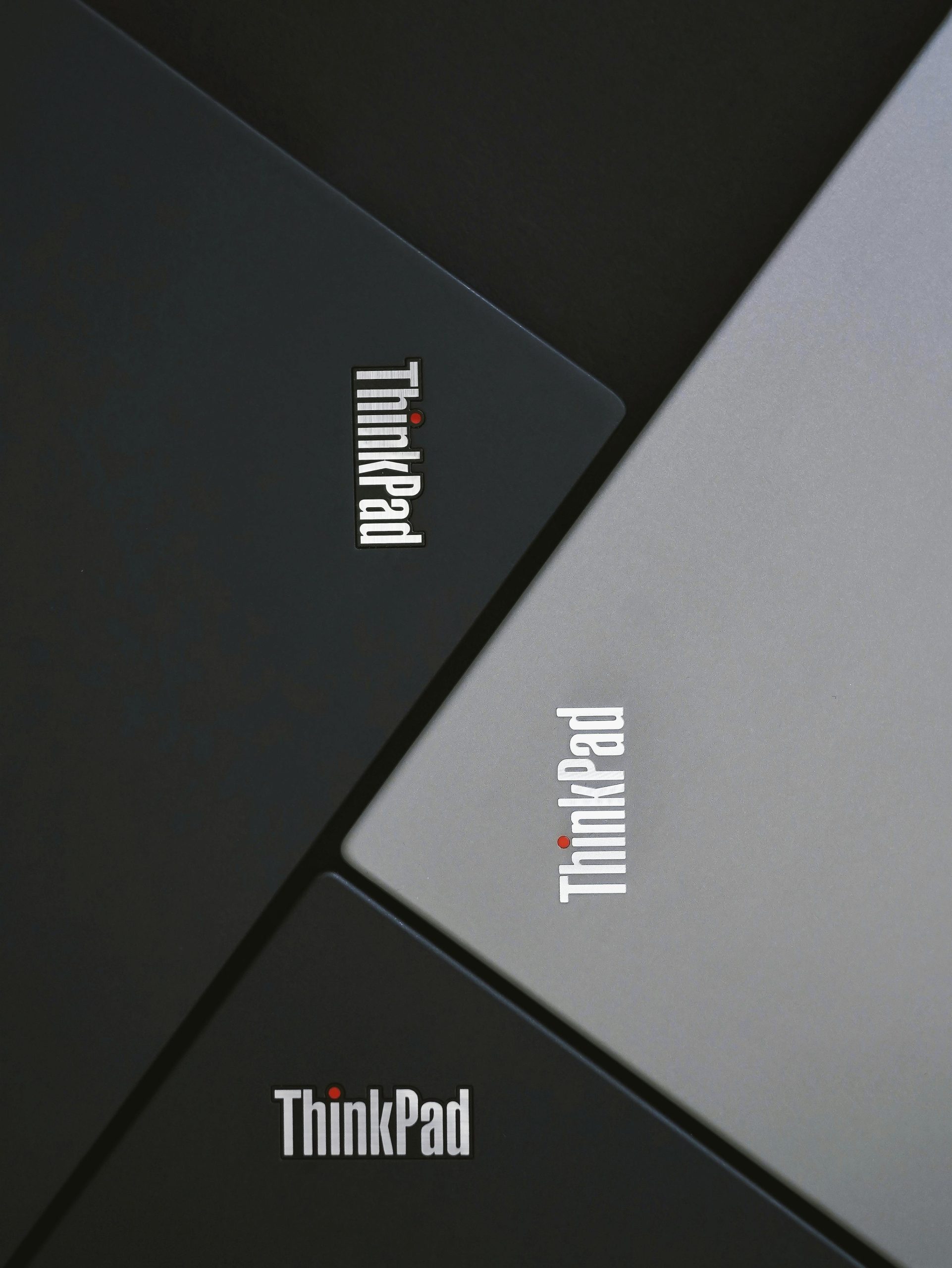
Lenovo began as “Legend Holdings” with a modest capital investment and a vision to bring advanced technology to Chinese consumers. The company’s global breakthrough came in 2005 when it acquired the personal computer division of IBM. This acquisition gave Lenovo ownership of the iconic ThinkPad brand and instantly positioned it as a major competitor in the international PC market.
Another milestone occurred in 2014 when Lenovo acquired Motorola Mobility from Google. This move strengthened Lenovo’s presence in the smartphone industry and expanded its product ecosystem.
Product Portfolio
1. Laptops and PCs
Lenovo is best known for its diverse laptop lineup, which includes:
ThinkPad series – Business-focused machines known for durability and security.
IdeaPad series – Affordable consumer laptops.
Legion series – High-performance gaming systems.
Yoga series – Premium convertible laptops with touchscreen functionality.
These product lines allow Lenovo to cater to students, professionals, gamers, and corporate users alike.
2. Smartphones and Tablets
Through its Motorola division and in-house devices, Lenovo offers smartphones that range from budget-friendly models to flagship devices. Its tablets are popular in education and business sectors because of their affordability and compatibility with productivity tools such as those from Microsoft.
3. Enterprise and Infrastructure Solutions
Lenovo also produces servers, storage systems, and cloud infrastructure solutions. Many of these systems use processors from Intel and AMD, enabling organizations to run data centers, analytics platforms, and AI workloads efficiently.
Innovation and Technology Strategy
Lenovo invests billions of dollars annually in research and development. Its innovation strategy focuses on five major pillars:
Artificial Intelligence – AI-optimized PCs and enterprise solutions.
5G and Connectivity – Devices designed for high-speed networks.
Edge Computing – Processing data closer to where it is generated.
Cloud Infrastructure – Scalable computing for businesses.
Sustainability – Energy-efficient devices and recyclable materials.
The company’s “Smarter Technology for All” philosophy emphasizes accessible innovation rather than premium pricing alone.
Market Position and Competition
Lenovo consistently ranks among the top PC manufacturers worldwide, competing with brands such as HP, Dell, and Apple. Its competitive advantages include:
Strong supply chain and manufacturing network
Broad product range for different budgets
Competitive pricing
Reliable customer support
Because Lenovo manufactures many components in-house, it can control costs and maintain consistent quality.
Financial Overview (Example Calculation)
To understand Lenovo’s pricing competitiveness, consider a simplified price-to-performance calculation for laptops.
Interpretation: Laptop A delivers better performance per dollar. Lenovo often targets this metric, aiming to maximize performance while keeping prices lower than rivals.
Strengths of Lenovo
1. Global Manufacturing Scale Lenovo operates manufacturing facilities across Asia, Europe, and the Americas, ensuring fast distribution and reduced costs.
2. Durability and Reliability ThinkPad laptops, for example, are famous for passing military-grade durability tests.
3. Wide Pricing Range From entry-level systems for students to enterprise servers, Lenovo serves nearly every customer segment.
4. Strong Enterprise Presence Many corporations rely on Lenovo hardware for offices and data centers due to its reliability and security features.
Challenges and Criticisms
Despite its success, Lenovo faces some challenges:
Intense competition in the PC and smartphone markets
Thin profit margins due to competitive pricing
Supply chain disruptions affecting global electronics
However, its diversified product lines help reduce dependence on any single market segment.
Sustainability Initiatives
Lenovo has committed to reducing greenhouse gas emissions and increasing the use of recycled materials in its devices. The company also promotes energy-efficient hardware and environmentally friendly packaging. These efforts align with global sustainability standards and appeal to environmentally conscious consumers.
Future Outlook
The future for Lenovo looks promising due to several trends:
Rising demand for remote work devices
Growth in gaming and high-performance computing
Expansion of artificial intelligence applications
Increasing adoption of cloud services
By investing heavily in innovation and infrastructure, Lenovo aims to remain a dominant force in global technology for decades to come.
FAQs
1. Is Lenovo a Chinese company? Yes. It was founded in China, but it operates globally with headquarters in both China and the United States.
2. Are Lenovo laptops good for students? Yes. The IdeaPad and Yoga series are popular among students because they offer good performance at affordable prices.
3. Why are ThinkPad laptops so popular in businesses? They are known for durability, security features, comfortable keyboards, and long lifespans.
4. Does Lenovo make gaming devices? Yes. The Legion series is specifically designed for gaming with powerful graphics and cooling systems.
5. How long do Lenovo laptops typically last? With proper care, many last 4–6 years or longer, depending on usage and maintenance.
6. Does Lenovo manufacture its own components? Some components are produced in-house, while others come from partners such as Intel and AMD.
7. Is Lenovo good value for money? Generally yes. The company focuses on balancing price and performance, making its devices competitive in most categories.
Calculation
Lenovo’s journey from a small startup to a global technology leader illustrates how strategic acquisitions, innovation, and customer-focused design can transform a company. With strong positions in PCs, smartphones, and enterprise solutions, it continues to shape the future of computing. Whether for students, gamers, or corporations, Lenovo remains a trusted name synonymous with reliability, performance, and value.
“Deshoptec appears to be a search term tied to deshoptec.com, an online shopping portal that lists products and claims to offer deals on electronics, accessories, and other items. However, there’s no widely known product officially named “Deshoptec 1000” — at least in reputable catalogs or verified marketplaces. Instead, the term is mostly connected to discussions about buying from or reviewing deshoptec.com.
Many shoppers search “Deshoptec 1000” because they saw a product with a similar name on the site or assumed it’s a model number. But online reviews don’t show any specific product details tied to “1000” aside from being part of the website name or user search query.
Is Deshoptec.com Legit? Overview
Before ordering anything from deshoptec.com, here’s what you should know:
⚠️ Red Flags Identified by Reviewers
The website shows very low prices, often much lower than standard markets — which can signal risk.
There’s limited company information or contact details, making it hard to verify legitimacy.
Customer service and refund details are unclear or difficult to reach.
Mixed or very few verified reviews available online.
👍 Possible Genuine Elements
Some users receive their orders and report positive experiences.
Basic website features like product listings and descriptions exist.
Conclusion: The lack of transparency means deshoptec.com cannot be fully confirmed as safe or trusted. It’s best to approach with caution and do further research before buying.
Things to Consider Before Buying
If you decide to shop at deshoptec.com:
✅ Check the payment options carefully. Ensure payments are processed through protected methods (like PayPal or reputed gateways).
✅ Try low-value purchases first. This reduces risk if the site turns out unreliable.
✅ Look for shipping and return details. Legitimate stores have clear delivery timelines and refund policies.
Calculation Example: Shipping Time
Let’s say the website claims delivery in 10–15 business days worldwide, but user experiences are longer.
📌 If an order is placed on January 1:
Earliest delivery estimate: 10 business days → around January 15
Latest delivery estimate: 15 business days → around January 22
So the delivery window could realistically be ~January 15–22 if everything goes right.
FAQs (Frequently Asked Questions)
❓ 1. Is Deshoptec 1000 a real product?
At this time, there’s no verified product named “Deshoptec 1000” widely recognized online. The phrase appears mainly linked to searches about deshoptec.com, not a distinct model.
❓ 2. Is Deshoptec.com trustworthy?
Reviews are mixed. Some buyers receive products successfully, but the site has unclear company info, limited contact details, and reports of delayed refunds — so it’s risky.
❓ 3. How can I reduce risk when ordering?
If you choose to buy:
Use secure payment methods.
Order low-cost items first.
Keep documentation for claims or disputes.
❓ 4. What do users say about delivery times?
Many users report longer waits than advertised, sometimes several weeks.
❓ 5. Can I get a refund easily?
Refund policies are unclear, and many buyers say refunds are hard to obtain.
Final Verdict
Deshoptec.com may not be an outright scam, but it does not meet the transparency, security, and reliability standards of well-known eCommerce platforms. If you were searching specifically for a “Deshoptec 1000” product, it’s wiser to double-check its existence and seller before purchasing.
Would you like me to help you find safe alternatives for whatever product you were searching for (e.g., electronics, gadgets)? If yes, tell me what type of item you’re looking for!
In the rapidly evolving landscape of 2026, the lines between artificial intelligence and blockchain technology are blurring. Leading this charge is ZNX (ZENEX Coin) , a cryptocurrency that has captured the market’s attention by positioning itself as critical infrastructure for the AI economy. After reaching an all-time high of $2 in late 2025, ZNX has cemented its place as more than just a speculative asset . This article explores the utility of ZNX, its market dynamics, and how to calculate its valuation metrics.
What is ZNX? The Infrastructure for Verifiable Data
ZNX is a decentralized protocol designed to facilitate the seamless exchange of computational value and data intelligence . Unlike traditional cryptocurrencies that serve as simple stores of value, ZNX is engineered as a utility layer for the AI era. It addresses a critical problem in the Web3 space: ensuring that data used to train AI models is authentic, verifiable, and privacy-preserving .
The ZNX token acts as the fuel for this ecosystem, serving several key functions:
Access Rights: Users need ZNX to access AI tools like predictive analytics and data validation services.
Contribute-to-Earn: Participants who provide clean datasets or computational power are rewarded with ZNX.
Staking and Governance: Holders can stake tokens to secure the network and vote on protocol upgrades .
ZNX and the Real World Asset (RWA) Connection
One of the strongest narratives driving ZNX is its deep integration with the Real World Asset (RWA) sector. RWA—which involves tokenizing real-world items like real estate or bonds on the blockchain—requires “trusted data pipelines” . ZNX provides the verifiable computation layer necessary to bring off-chain assets onto the blockchain securely.
By treating data as a commodity, ZNX enables the tokenization of datasets, effectively turning them into RWAs that can be bought and sold. This is particularly vital as we move toward a “generative economy” where AI-generated content needs clear ownership and provenance .
Market Performance and Tokenomics (2023–2026)
To understand the value of ZNX, one must look at its historical price action and supply dynamics. According to on-chain data and market history, ZNX has experienced significant volatility, characteristic of deep-tech crypto projects .
Launch and All-Time High: ZNX launched in February 2023 at approximately $0.3758. After a turbulent 2024 where it bottomed out at $0.021, the token skyrocketed in 2025, reaching a peak of $2.00 in December .
Supply: The contract address on Ethereum shows a Max Total Supply of 120,300,000 ZNX.
Current Dynamics: As of early 2026, the token is trading in a range between $0.38 and $0.48, reflecting a consolidation phase after the explosive 2025 rally .
Calculation: Market Capitalization and Volatility
When evaluating ZNX, there are two key calculations to understand: Market Cap and Volatility.
1. Market Capitalization While the “Circulating Supply Market Cap” is often listed as $0 on some trackers due to data delays , we can calculate the Fully Diluted Valuation (FDV) based on the max supply.
Formula: Max Supply × Current Price
Example Calculation: If ZNX is trading at $0.40, the calculation is: 120,300,000×0.40=$48,120,000
Result: The Fully Diluted Valuation would be approximately $48.12 million.
2. Volatility and Return on Investment (ROI) ZNX has shown extreme yearly returns, which is crucial for risk calculation .
2024 Performance: The token started the year at $0.1476 and closed at $0.0299.
These figures highlight the high-risk, high-reward nature of investing in AI-focused crypto assets.
How to Trade and Calculate Grid Profits
For traders, ZNX is available on spot markets like the ZNX/USDT pair. Given its volatility, automated grid trading strategies are popular .
Grid Trading Calculation Example: If you set a grid strategy with a price range of $0.30 to $0.50, and the bot completes 10 grid trades with a profit of $0.01 per trade on 100 ZNX:
Formula: Number of Trades × Profit per Trade × Volume
Calculation: 10×0.01×100=$10 profit (excluding fees). This allows traders to profit from volatility without needing the price to skyrocket.
Risks and Future Outlook
While ZNX is positioned at the intersection of AI and RWA—two of the largest narratives in the market—it faces significant risks :
Regulatory Scrutiny: As AI and crypto regulation evolves, compliance hurdles could impact growth.
Ecosystem Execution: The project must successfully onboard both data providers and consumers to maintain utility.
Market Volatility: With annual volatility reaching as high as 446% in 2025 , price swings can be extreme.
(FAQs)
1. What is the core utility of ZNX?
The core utility of ZNX is to serve as infrastructure for data verification and privacy-preserving computation. It allows AI models to access traceable, secure datasets and enables the tokenization of data as a Real World Asset .
2. Is ZNX a good investment?
Based on historical data, ZNX has shown the ability to generate massive returns (1,135% in 2025) but also significant losses (-79.74% in 2024) . It is considered a high-risk asset tied to the success of the AI and RWA narratives.
3. How is the ZNX token price calculated in relation to its supply?
The price is determined by market supply and demand on exchanges. However, the Fully Diluted Valuation (FDV) is calculated by multiplying the current market price by the maximum supply of 120,300,000 tokens.
4. Where does demand for ZNX come from?
Demand is primarily driven by three forces: 1) AI’s need for trustworthy data, 2) RWA protocols requiring off-chain data verification, and 3) the regulatory requirement for privacy-preserving computation .
5. Can ZNX be used for staking?
Yes. Token holders can stake ZNX to secure the network consensus mechanism. Staking provides yield and aligns user interests with the long-term stability of the platform .
6. How does ZNX relate to Real World Assets (RWA)?
ZNX is not a traditional RWA token, but it provides the “trustworthy data + privacy compliance” layer that institutional RWA adoption requires. It helps turn off-chain data into tokenized, on-chain assets .
7. What was the highest price of ZNX?
The highest price that ZENEX (ZNX) reached was $2.00 in December 2025 .
8. How do you calculate profit from ZNX trading?
Profit is calculated by subtracting the entry price from the exit price, then multiplying by the number of tokens sold. For example, buying at $0.40 and selling at $0.50 on 1,000 tokens yields a profit of $100 (excluding fees).
Kite software is a modern trading platform designed for investors and traders who want a fast, reliable, and user-friendly interface to buy and sell financial instruments. Developed by Zerodha, Kite has become one of the most widely used web-based trading platforms in India due to its speed, clean interface, advanced charting tools, and low brokerage structure. This article explores Kite in detail—its features, advantages, limitations, pricing, practical trading calculations, and frequently asked questions.
What Is Kite Software?
Kite is a web and mobile trading platform that allows users to trade stocks, commodities, currencies, and derivatives. Unlike traditional trading terminals that require installation, Kite runs directly in a browser or mobile app, making it accessible from almost any device. Its lightweight architecture ensures fast order execution, which is critical in markets where price movements happen in milliseconds.
The platform is designed for both beginners and professional traders. Beginners benefit from its intuitive interface and educational resources, while experienced traders appreciate its advanced charting, indicators, and API integrations.
Key Features of Kite Software
1. Minimalist User Interface
Kite’s design focuses on simplicity. It removes clutter and highlights essential information such as price charts, order books, and positions. This improves decision-making speed and reduces confusion during volatile market conditions.
2. Advanced Charting Tools
The platform offers interactive charts powered by TradingView and ChartIQ. Traders can use:
Multiple time frames
Technical indicators
Drawing tools
Pattern analysis
These features allow users to perform technical analysis without relying on external software.
3. Lightning-Fast Order Execution
Speed is crucial in trading. Kite’s infrastructure processes thousands of orders per second, helping traders avoid slippage (difference between expected and executed price).
4. Market Depth and Analytics
Users can view real-time bid/ask prices, market depth, and trading volumes. This data helps traders analyze supply and demand before entering a trade.
5. Multi-Asset Trading
Kite supports trading in:
Equity
Futures & options
Commodities
Currencies
This makes it a comprehensive platform for diversified portfolios.
6. Cloud-Based Access
Because it is web-based, your settings, watchlists, and preferences sync automatically across devices.
Benefits of Using Kite Software
Ease of Use
Even first-time traders can learn the interface quickly. The dashboard is straightforward and avoids technical jargon.
Cost Efficiency
Kite is known for its discount brokerage model, which typically charges low or flat fees per trade, making it attractive for active traders.
Reliability
The platform is built with scalable infrastructure designed to handle peak trading hours.
Integration Support
Advanced users can integrate Kite with third-party tools or algorithms using APIs, allowing automated trading strategies.
Limitations of Kite Software
While Kite is powerful, it is not perfect. Some drawbacks include:
Requires stable internet connection
Advanced features may overwhelm beginners initially
Occasional downtime during extreme market volatility
Limited fundamental analysis tools compared to specialized research platforms
Understanding these limitations helps traders prepare backup strategies, such as placing stop-loss orders.
Brokerage and Cost Calculation Example
Understanding costs is essential because brokerage and taxes affect profits. Let’s calculate a sample trade.
Example Trade
You buy 100 shares of a stock at ₹500 and sell at ₹520.
Step 1: Calculate Investment 100 × 500 = ₹50,000
Step 2: Calculate Selling Value 100 × 520 = ₹52,000
Step 3: Gross Profit ₹52,000 − ₹50,000 = ₹2,000
Step 4: Brokerage Charges Assume flat brokerage = ₹20 per order Buy order = ₹20 Sell order = ₹20 Total brokerage = ₹40
Step 5: Taxes and Charges (Example Estimate)
STT + GST + exchange fees ≈ ₹60
Step 6: Net Profit ₹2,000 − (₹40 + ₹60) = ₹1,900
This example shows how transaction costs slightly reduce profit. Traders should always factor charges into strategy planning.
Who Should Use Kite?
Kite software is suitable for:
Day traders who need fast execution
Swing traders using technical analysis
Long-term investors monitoring portfolios
Algorithmic traders using APIs
Beginners looking for a simple platform
Tips for Using Kite Effectively
Use Stop-Loss Orders – Protects you from sudden price drops.
Customize Watchlists – Track only relevant stocks.
Practice with Small Trades – Learn the platform before large investments.
Use Technical Indicators Wisely – Avoid overloading charts.
Monitor Market Depth – Helps identify buying or selling pressure.
Security and Safety
Kite includes multiple security layers:
Two-factor authentication
Encrypted connections
Session timeouts
Device login tracking
These features protect accounts from unauthorized access. However, users should also follow best practices such as strong passwords and avoiding public Wi-Fi when trading.
Comparison With Traditional Trading Platforms
Feature
Kite
Traditional Terminals
Installation
Not required
Required
Speed
Very fast
Moderate
Interface
Simple
Complex
Cost
Low
Higher
Accessibility
Any device
Usually single device
This comparison highlights why many traders prefer modern web platforms like Kite.
Future of Kite Software
As financial technology evolves, trading platforms are expected to integrate artificial intelligence, predictive analytics, and advanced automation. Kite is already moving toward these innovations through API support and analytical tools. In the future, traders may benefit from real-time AI trade suggestions, portfolio optimization algorithms, and deeper market insights.
(FAQs)
1. Is Kite software free?
Opening and maintaining an account may involve certain fees depending on the broker, but the platform itself is typically provided free to registered clients.
2. Can beginners use Kite?
Yes. Its interface is beginner-friendly, and users can start with small trades to learn gradually.
3. Does Kite work on mobile?
Yes. It is available on Android, iOS, and web browsers.
4. Is Kite suitable for day trading?
Yes. Its fast order execution and real-time data make it ideal for intraday trading.
5. Does it support technical indicators?
Yes. Kite offers dozens of indicators such as RSI, MACD, moving averages, Bollinger Bands, and more.
6. What internet speed is required?
A stable connection is more important than speed. Even moderate broadband works well, but unstable networks may cause delays.
7. Is Kite safe for trading?
Yes, it uses encryption and multi-factor authentication. Still, users should follow personal security precautions.
Final Thoughts
Kite software has transformed online trading by combining simplicity, speed, and powerful analytics in a single platform. Its clean design makes it approachable for beginners, while its advanced tools satisfy professional traders. With low costs, cloud-based convenience, and strong security, it stands out as one of the most practical trading platforms available today.






 Entertainment3 months ago
 News4 months ago
 Tech4 months ago
 Local Information4 months ago
 Local Information4 months ago
 Entertainment4 months ago
 Tech4 months ago
 Tech4 months ago